Most businesses reach the same point eventually. Traffic stalls. Rankings sit on page two. Leads that used to come from search start drying up. The instinct is usually to publish more content, but publishing alone rarely fixes the underlying problem.
Search has changed. Google no longer rewards keyword stuffed pages or a handful of backlinks bought from a directory. Google’s ranking systems evaluate technical performance, content depth, user experience and authority together, and they do this continuously as the site and its competitors change. Keeping up with that while running a business is a full time job on its own.
Most businesses know they need SEO, but few understand what they are actually paying for. Professional SEO is not one service. It is a combination of technical work, content strategy, authority building and ongoing optimisation, each of which addresses a different reason a website fails to attract search traffic.
What Are Professional SEO Services?
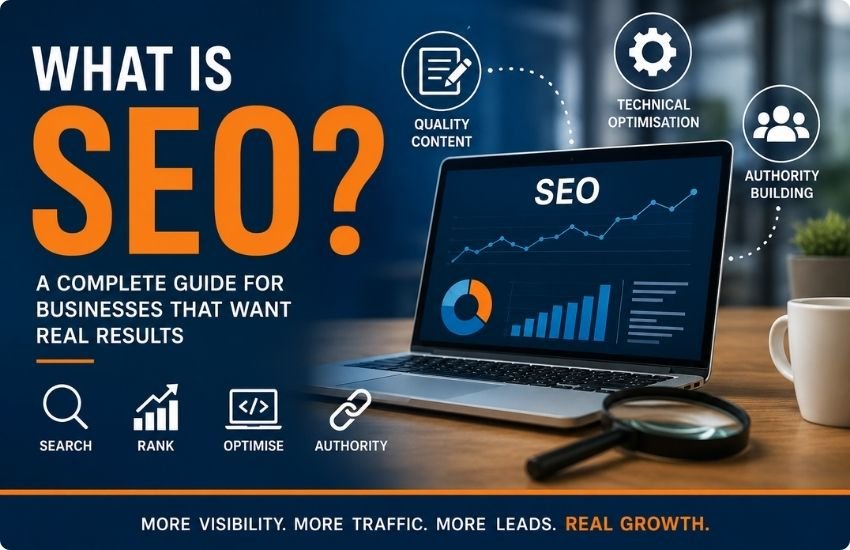
Professional SEO covers four connected areas of work. During audits, the same pattern shows up repeatedly: a business has invested in one of these areas, usually content, while leaving the other three untouched. Rankings rarely improve until all four are addressed together.
Technical SEO
This is the foundation. If a search engine cannot crawl and index a website properly, nothing else matters.
Most technical problems are invisible to business owners because the site still looks and works fine on the surface. Search engines, meanwhile, may be struggling to crawl certain pages, deciding not to index others, or unable to work out which version of a page should actually rank. Most businesses assume technical SEO mainly means making a website faster. In practice, indexing and canonicalisation problems tend to have a far bigger impact than load speed, because Google cannot consistently identify which pages should rank at all, and a fast site with confused indexing will still underperform.
Crawlability, index coverage and crawl budget determine whether Google even sees the full site. Site architecture, XML sitemaps and canonical tags determine whether it understands the relationship between pages once it does. Core Web Vitals cover load speed, interactivity and visual stability, while structured data helps search engines identify entities and page purpose.
That doesn’t move rankings on its own, but it can change how a page is represented in search, making listings eligible for rich results and generally more prominent, which tends to lift click-through rate even when the ranking position stays the same. Robots.txt then controls which parts of the site search engines are allowed to reach in the first place.
One issue we regularly see during technical audits is duplicate pages competing against each other for the same keyword, often multiple location or service pages targeting near identical terms. Consolidating them into a single authoritative page usually improves both crawl efficiency and ranking stability within a few weeks. Search Console’s coverage report is usually where this shows up first, flagging pages as duplicates or excluded well before the drop is visible in traffic.
On-Page SEO
This covers what builds authority outside the website itself. Link building earns references from other credible websites, while digital PR generates coverage and mentions that build both authority and brand recognition at the same time.
Local citations keep a business listed consistently across directories, and all of this feeds into what Google’s guidance around Experience, Expertise, Authoritativeness and Trust (E-E-A-T), part of its Search Quality Rater Guidelines, is trying to describe: whether a business has an established, recognised presence beyond its own website.
Local SEO
For businesses that serve a specific area, this is often the highest impact category. Google Business Profile optimisation largely controls how a business appears in local search and maps, and it works alongside reviews, which influence both rankings and how likely someone is to actually call.
Underneath both sits NAP consistency, keeping name, address and phone number identical across every listing. A mismatched phone number on one directory sounds minor, but it is one of the more common causes of suppressed local rankings we find during audits.
Which of these four areas has had dedicated attention on your website in the past year? For most businesses we speak with, the honest answer is none of them.
Why Businesses Invest in Professional SEO Services
The decision to hire an SEO agency or consultant usually comes down to a handful of goals: consistent organic traffic that doesn’t stop the moment a budget does, more qualified leads rather than just more visitors, and visibility across a wider set of related searches instead of a single term. Underneath those sits a simple cost comparison.
As paid search costs continue rising across most industries, a website, content library and set of credible backlinks become assets that keep compounding long after a campaign ends, rather than spend that disappears the moment it stops.
The Biggest Benefits of Professional SEO Services
- Higher search engine rankings. Rankings improve when technical issues are fixed, content matches intent and the site earns credible links. This is usually the first metric clients ask about, though it is a means to an end rather than the end itself.
- Better website traffic. Traffic growth follows rankings, but quality matters as much as volume. A page ranking for the right terms attracts visitors more likely to convert than a broad audience with no real interest in buying.
- Higher conversion rates. Pages built around what a searcher actually wants convert at a noticeably higher rate than pages that simply mention the right keyword. Traffic pulled in through a mismatched term rarely converts, no matter how much of it arrives.
- Stronger brand trust. Trust builds through several signals working together: consistent visibility for branded searches, positive reviews, credible backlinks and a technically sound site. None of these move the needle alone. They build cumulatively as work continues.
- Better user experience. Core Web Vitals, mobile usability, clear navigation and accessibility all sit here. A slow or confusing site loses visitors before they see what a business offers, and this can influence search performance alongside many other signals.
- Sustainable long-term growth. Paid advertising produces results while spend continues and stops the moment it does. SEO takes longer to build but keeps generating traffic and leads well after the initial work is finished.
How Professional SEO Generates Business Growth
The traffic itself arrives closer to a purchase decision, since it was attracted by intent matched content rather than a broad campaign. For service businesses this shows up as more phone calls through local SEO and Google Business Profile work, and more quote requests through content built around commercial intent, such as pricing and comparison pages.
For ecommerce it shows up as more direct sales through product pages structured to rank and convert once a visitor arrives. Over time, customer lifetime value also tends to rise, since organic visitors who research thoroughly before buying often show stronger trust and repeat purchase behaviour than visitors arriving through other channels.
What Does an SEO Agency Actually Do?
This is one of the most searched questions around SEO services, and it deserves a direct answer rather than a vague one.
- SEO audit. The starting point for almost every engagement. This reviews technical health, content quality, backlink profile and competitor positioning to identify what is holding a site back. It typically draws on Google Search Console and Google Analytics 4 data to establish a baseline for impressions, clicks, rankings and conversions before any work begins.
- Competitor analysis. Understanding what competitors rank for, and how, reveals gaps a business can target and tactics already proven to work in that industry.
- Content strategy. Planning what content to create, update or remove, based on the keyword research and gaps identified during the audit.
- Technical improvements. Fixing crawlability and index coverage issues, improving site speed, correcting canonical tags and implementing structured data.
- Link building. Earning backlinks from relevant, credible websites through outreach, digital PR or content that naturally attracts references.
- Prioritisation. Not every issue found during an audit carries equal weight. Part of the work is deciding what to fix first based on expected impact, which is often where the difference between agencies shows up most clearly.
- Ongoing testing. Titles, meta descriptions and page layouts are adjusted and monitored over time rather than set once and left alone.
- Monthly reporting. Covered in more detail below.
What Results Should an SEO Agency Report?
Rankings alone tell an incomplete story. A ranking can improve while traffic stays flat, or traffic can grow while leads do not. A proper report connects several layers together: impressions and click-through rate from Search Console, showing how often the site appears in search and how often people actually click, organic traffic broken down by landing page, keyword rankings for the terms being actively targeted, and conversions tracked in Google Analytics 4, whether that means form submissions, calls or purchases.
Where it is trackable, revenue attributed to organic search should sit alongside those numbers rather than being reported separately, or not at all.
If an agency can only show you a ranking spreadsheet with no connection to traffic or leads, that is worth asking about directly.
Professional SEO vs DIY SEO
Some businesses attempt SEO internally before deciding to bring in outside help. The comparison usually looks like this.
| Factor | DIY SEO | Professional SEO |
|---|---|---|
| Learning Curve | Learn SEO while balancing day-to-day business responsibilities. | Built on experience from managing SEO across multiple industries and websites. |
| Tools & Data | Often limited to free or basic SEO tools. | Access to professional keyword research, technical auditing, competitor analysis and rank tracking platforms. |
| Approach | Trial and error with limited historical data. | Proven processes refined through previous campaigns and real-world results. |
| Speed of Implementation | Progress depends on available time and competing priorities. | Dedicated focus enables faster identification, prioritisation and implementation. |
| Problem Diagnosis | More difficult to identify why rankings or traffic have stalled. | Experience helps identify patterns, diagnose issues quickly and recommend the most effective solution. |
DIY SEO is not a mistake. Many businesses start there. The biggest challenge is often not effort, but understanding what effective SEO actually involves, which tasks matter most, and having the time and tools to implement them consistently.
SEO vs Google Ads
Both are legitimate ways to generate traffic through search, and many businesses use both together. The difference comes down to how each behaves over time.
Google Ads produces visibility immediately, but that visibility stops the moment the campaign is paused, and cost per click tends to rise as competition in an industry increases.
SEO takes longer to show results, often a few months before meaningful movement, but the traffic it generates does not require ongoing spend to maintain. Over a long enough timeline, the cost per visitor from SEO tends to fall as rankings continue holding position with no additional spend behind them.
A business that needs leads next week will lean on paid ads. A business planning three years ahead will want SEO working alongside it.
How Long Does SEO Take?
This depends on the starting point, competition and consistency of the work, but a general pattern holds across most industries.
Foundations and Early Implementation
Technical fixes are implemented, the content strategy is developed and initial keyword targeting begins. Ranking movement is often limited at this stage, even when the underlying work is progressing well.
Early Ranking and Traffic Growth
Rankings for lower-competition keywords may begin to improve. Organic traffic often increases gradually as Google recrawls, re-evaluates and gains confidence in the website.
Stronger Visibility and Lead Growth
More competitive keywords may start moving upward, with traffic, enquiries and lead volume typically showing a clearer positive trend.
Industry competition, the website’s existing authority, its technical condition and the consistency of the work all influence how quickly measurable results appear.
Realistic Expectations
Can SEO guarantee rankings?
No. Any agency that promises a specific ranking position is not being straightforward with you. Google's algorithm changes continually, and rankings are also influenced by competitor activity that no agency controls. A reputable SEO agency can commit to a clear strategy, transparent reporting and a proven process designed to improve long-term organic performance.
Is SEO expensive?
Costs vary depending on your goals, competition and the amount of work required. A better comparison is the long-term cost per lead versus paid advertising. While SEO often requires an upfront investment, established rankings can continue generating enquiries without paying for every click.
Is hiring an SEO agency actually worth it?
For most businesses without in-house SEO expertise, it can be. The alternative is often spending significant time learning SEO, purchasing specialist tools and progressing through trial and error instead of focusing on running the business.
What should an SEO company not promise?
Be cautious of guaranteed first-page rankings, guaranteed results within a few weeks or reports that focus only on keyword positions without explaining how SEO is affecting traffic, enquiries and revenue.
Is SEO worth it if my website already ranks well?
Usually, yes. Rankings are never permanent. Competitors continue improving their websites, search behaviour changes, content gradually loses relevance and technical issues can build up over time. Websites that appear stable today can slowly lose visibility if they are not maintained, which is why ongoing monitoring tends to matter as much as the initial work.
What Happens During the First SEO Audit?
This is one of the most common questions from businesses considering SEO for the first time, and the process usually follows a similar shape.
The audit starts with technical health: crawlability, indexing, Core Web Vitals and any structural issues affecting how the site is understood. From there it moves into content, reviewing existing pages against the keywords and search intent they should be targeting. A backlink review follows, identifying both opportunities and any low-quality links that could be holding the site back.
Finally, a competitor comparison shows where the business currently stands relative to others ranking for the same terms.
The output is usually a prioritised list of issues, ranked by expected impact rather than by how easy each one is to fix.
Signs Your Business Needs Professional SEO
When Should a Business Hire an SEO Agency?
Beyond the warning signs above, there are a few specific moments where bringing in SEO support tends to pay off before problems even show up. Launching a new website is one of the clearest, since early technical and structural decisions are far cheaper to get right than to fix later.
A planned redesign carries similar risk, as redesigns are one of the most common causes of the kind of indexing and migration issues covered in the case study earlier.
Expanding into new locations, growing an ecommerce catalogue or entering a new market all multiply the number of pages competing for attention, which is exactly the kind of complexity that benefits from a deliberate structure from the start rather than one applied retroactively.
How to Choose the Right SEO Agency
- Experience. Ask how long the agency has worked in SEO and across which industries. Broad experience tends to translate into faster diagnosis when something isn't working.
- Reporting. Clarify what will be reported and how often. Rankings alone are not enough, reporting should tie back to the traffic, leads and revenue metrics covered above.
- Transparency. An agency should explain what work is being done each month and why, without relying on vague language about visibility or growth.
- Case studies. Ask for examples with specific figures, such as traffic growth, ranking movement or lead increases.
- Industry experience. Prior work in a similar industry can shorten the learning curve, though it is not always essential if the agency's process is strong.
Questions worth asking before hiring:
Why SEO Campaigns Fail
Failure here rarely comes down to the strategy itself. It is usually one of a small number of recurring causes, some on the business side and some in how the work is actually carried out.
On the expectations side, the most common cause is simply timing. Expecting page one rankings within weeks sets a business up to abandon a strategy just as it starts working, and stopping around the three month mark, right before meaningful movement typically begins, is one of the most frequent reasons a campaign gets judged as a failure when it was never given the chance to succeed.
Hiring on price alone tends to compound this, since the cheapest agencies are often cheap because the work is templated rather than tailored to the specific site, and that shows up later as results that plateau quickly.
On the execution side, audit recommendations that never actually get implemented are a persistent problem, often because internal teams lack the time or technical access to make the changes. Targeting the wrong keywords, chasing high volume terms with little realistic chance of ranking while ignoring more specific terms that convert better, wastes effort in a different way.
Publishing thin content that doesn’t fully answer a query struggles against more thorough competitor pages, and neglecting internal linking leaves pages isolated, receiving less authority and harder for search engines to understand. Underneath most of these sits the same root issue: focusing only on rankings as the goal, rather than on whether the page matches what the searcher actually wants once they arrive.
An Example of What This Looks Like in Practice
A local plumbing and heating business came to us with declining enquiries despite what looked like a steady flow of website traffic. On the surface nothing seemed wrong, the site loaded fine and the content read reasonably well, so the initial assumption internally had been that the market had simply gone quiet.
The audit told a different story. Search Console showed several service area pages, one for each suburb the business covered, all targeting almost identical keywords. Rather than each page building its own ranking strength, they were splitting authority between them and effectively competing against each other.
Two of those pages had also been excluded from Google’s index entirely after a site migration eighteen months earlier, something the business had no way of knowing without checking coverage reports directly.
The fix had two parts. The overlapping suburb pages were consolidated into fewer, stronger pages organised around service areas rather than individual postcodes, and the indexing errors from the migration were corrected so the excluded pages could be crawled and ranked again.
Neither change involved writing new content. Within four months, monthly impressions rose from roughly 3,200 to 7,500, and enquiry form submissions increased alongside that growth. The traffic had effectively been available the whole time. The technical and structural issues had just been preventing Google from surfacing pages the business already had.
FAQS About Professional SEO Services
How much do professional SEO services cost?
Costs vary based on scope, competitiveness of the industry and the agency’s experience. Most ongoing engagements are priced monthly rather than as a one time project, since SEO requires continuous work rather than a single fix.
Can I do SEO myself?
To an extent. Basic on-page changes and content publishing are achievable without outside help. Technical SEO and competitive link building typically require more specialised tools and experience.
How is SEO measured?
Through the combination of metrics covered earlier: rankings, impressions, click-through rate, traffic, conversions and, where trackable, revenue attributed to organic search.
What industries benefit most from SEO?
Any business with searchable demand can benefit, though local service businesses, ecommerce and industries with high value purchase decisions tend to see particularly strong returns.
How often should SEO be updated?
Continuously. Algorithms change, competitors adjust their own strategies and content needs periodic updates to stay relevant. Effective SEO is treated as ongoing rather than a project with a fixed end date.
What happens if I stop SEO?
Rankings built through SEO tend to hold for a period after work stops, but typically decline over time as competitors continue optimising and existing content ages without updates.
Key Takeaways
- Professional SEO combines technical optimisation, content, authority building and ongoing performance analysis.
- Results typically build over months rather than weeks, making consistency one of the biggest drivers of success.
- The goal is not just higher rankings, but more qualified traffic, enquiries and long-term business growth.
- Organic search becomes a marketing asset that can continue generating leads long after the initial optimisation work.
- If your website has not received dedicated SEO attention within the past year, it may already be losing valuable traffic and enquiries to competitors.